
Networking Isn’t About Who You Know. It’s About How You Connect.
For many people, the word networking brings to mind crowded rooms, awkward introductions, business cards and the pressure to make an impression.
But what if we have been thinking about networking the wrong way?
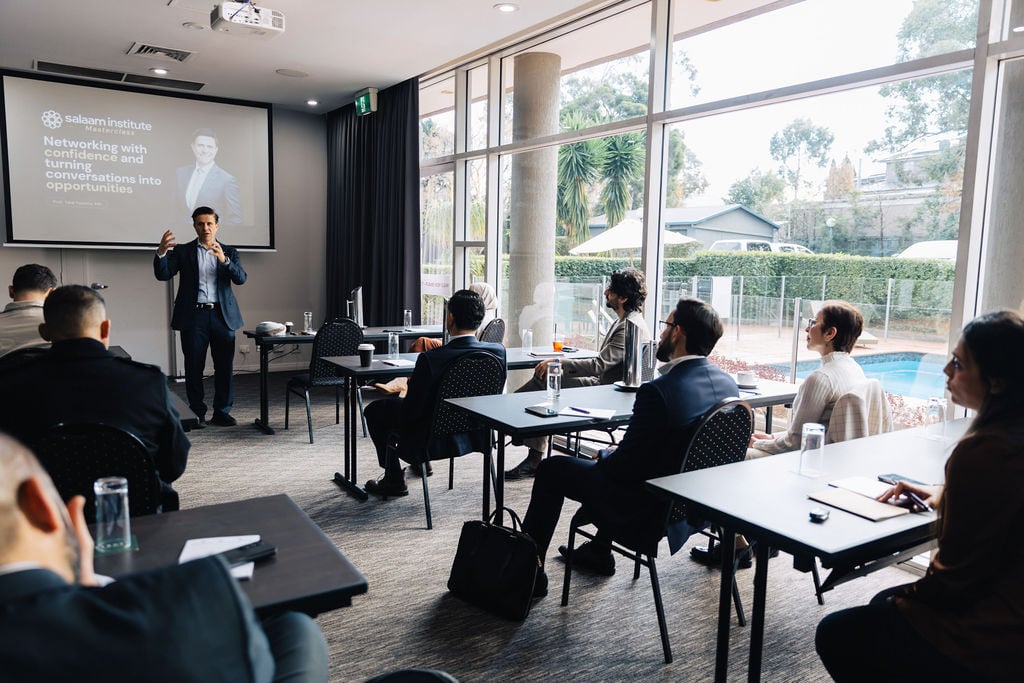
FAt a recent Salaam Institute Masterclass, Professor Talal Yassine AM challenged participants to rethink what it actually means to build a professional network — and why the ability to create genuine relationships is becoming an increasingly important professional skill.
His premise was simple:
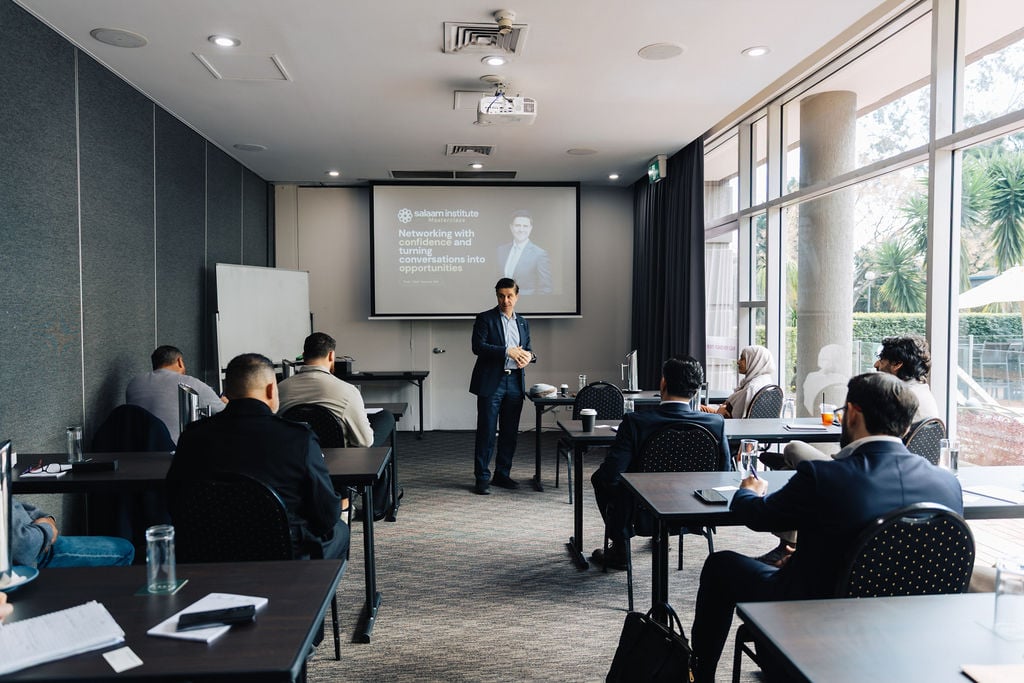
“Networking isn’t about collecting business cards. Networking is about earning the right to have a second conversation.”
That distinction changes everything.
From transactions to relationships
One of the central themes of the masterclass was the difference between transactional networking and relationship networking.
Transactional networking begins with: What can I get?
It focuses on collecting contacts, delivering a pitch, finding the most important person in the room and looking for an immediate return.
Relationship networking asks a very different question: What can I learn or contribute?
Instead of accumulating contacts, the aim is to create connection. Instead of delivering a pitch, you start a conversation. Instead of searching for the most important person in the room, you seek out the most relevant people. And instead of expecting an immediate outcome, you invest in long-term trust.
It is a subtle shift in mindset, but an important one.
A network isn't simply the number of people in your phone, your inbox or your LinkedIn connections. Its real value lies in the relationships behind those names.
A lesson that started at Flemington Markets
For Talal, this understanding of networking began long before boardrooms, universities and corporate events.
It began at Flemington Markets.
As he shared during the masterclass, the markets taught him how to read a room and, importantly, how to understand people. Success came from understanding customers rather than simply trying to sell to them. Over time, transactions became relationships and people returned because they felt understood.
The lesson he carried forward was straightforward: before you persuade someone, you first have to really get to know them.
It is a principle that translates remarkably well from the market floor to almost every professional environment.
People remember how you engage with them. They notice whether you're listening or simply waiting for your turn to speak. And genuine curiosity tends to create stronger connections than the perfectly rehearsed elevator pitch.
Why human connection matters more than ever
Perhaps counterintuitively, networking may become more important — not less — as technology becomes more sophisticated.
Talal's presentation highlighted data from the World Economic Forum's Future of Jobs Report 2025, including that 39% of workers' core skills are expected to change by 2030 and employer demand for leadership and social skills has increased.
But the more interesting observation from the masterclass was this:
Technology can help us find people, but it cannot build trust.
We have never had more ways to connect. LinkedIn can identify the person we want to meet. An email can reach someone on the other side of the world in seconds. AI can help us research them before the meeting.
None of those tools can create the relationship for us.
Empathy, active listening and curiosity remain fundamentally human skills — and increasingly valuable ones.
Prepare. Connect. Continue.
Rather than treating networking as something that comes naturally to some people and not others, Talal presented it as a skill that can be approached deliberately.
His framework breaks networking into three stages: Prepare, Connect and Continue.
Under Prepare sit three ideas: purpose, people and presence.
Under Connect: ask, listen and link.
And under Continue: remember, contribute and invite.
The framework reinforces an important point: networking begins before you walk into the room and continues long after you leave it.
Talal encouraged participants to treat an event almost like an “open-book exam”: know why you're going, find out who will be there, understand their backgrounds and think about the conversations you would genuinely like to have.
Preparation doesn't make a conversation less authentic. It gives you the confidence to make it more meaningful.
And once the conversation begins, the objective isn't to impress. It is to connect.
Ask good questions. Listen properly to the answers. Look for common ground. Be curious about the person standing in front of you rather than preoccupied with what you want to say next.
Then, importantly, continue the relationship.
Because the value of networking rarely comes from the first conversation.
Networking is not a personality type
There is also a broader lesson here for anyone who has ever said, “I'm just not good at networking.”
Good networking doesn't require you to be the loudest person in the room. It doesn't require an extroverted personality or an ability to effortlessly introduce yourself to strangers.
It requires curiosity, preparation, listening and practice.
That was reflected in the masterclass itself, which moved beyond theory into practical exercises around what good — and bad — networking actually looks like. The message throughout was not to pursue perfection, but practice.
Confidence, after all, is rarely something we acquire before doing something. More often, it is something we build by doing it repeatedly.
The opportunity is often the relationship itself
We tend to think about networking in terms of outcomes: a new client, a job opportunity, an introduction, an investor or a business deal.
Those things matter.
But focusing only on the immediate outcome can mean missing the greater value of a network.
The person you meet today may not be able to help you today. They may introduce you to someone five years from now. They may offer an insight that changes how you think. They may become a mentor, colleague, collaborator or friend. Or you may be the person who is able to help them.
That is why perhaps the most useful measure of a successful networking conversation isn't whether you walked away with something.
It is whether there is a reason to have another conversation.
And that may be the simplest way to rethink networking altogether.
Don't enter the room asking, “What can I get?”
Enter it asking, “Who can I genuinely connect with?”
The opportunities have a way of following.
Share this
You May Also Like
These Related Stories

No More Playing Small: Owning Your Power as a Muslim in Australia
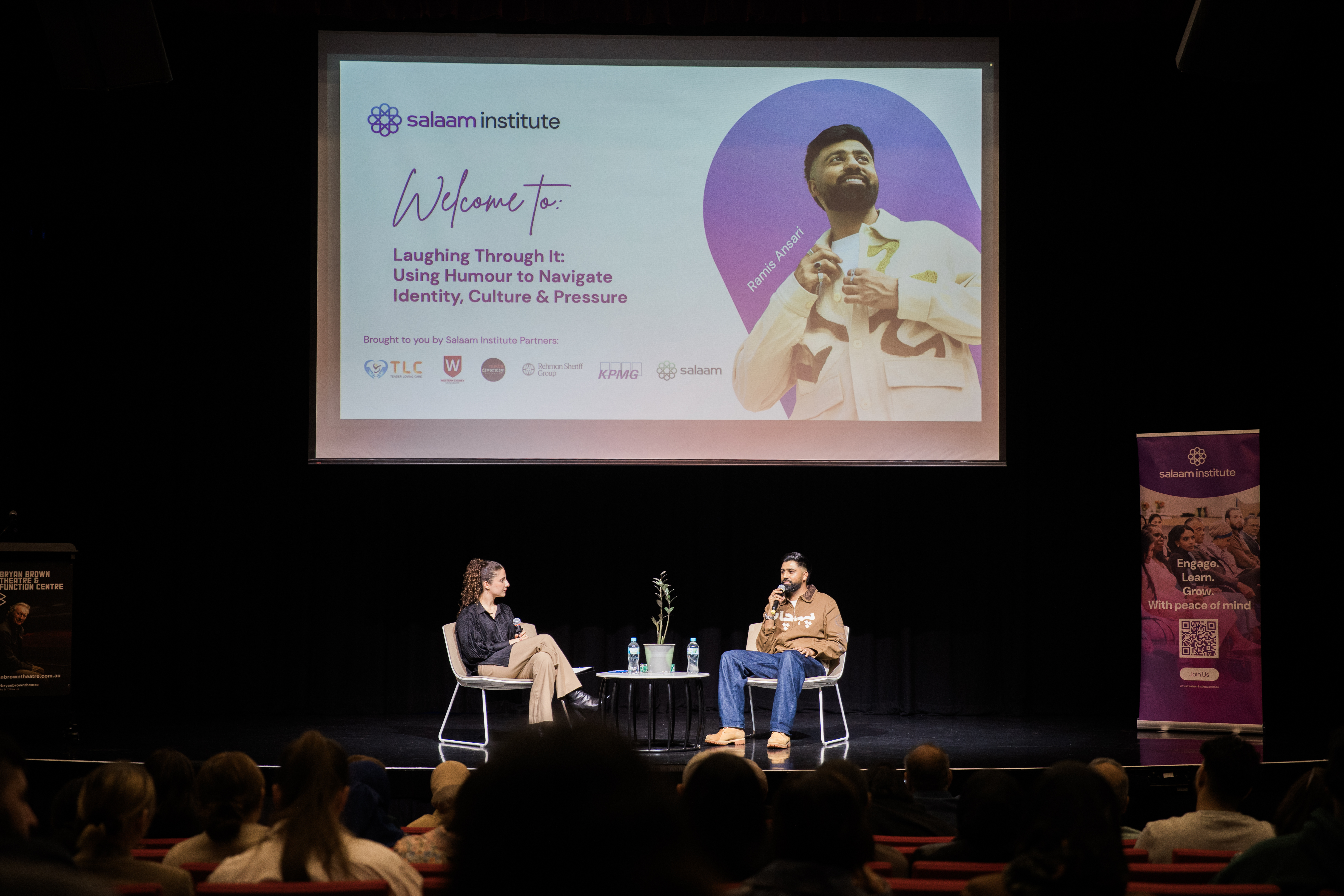
Laughing Through It: An Evening with Ramis Ansari